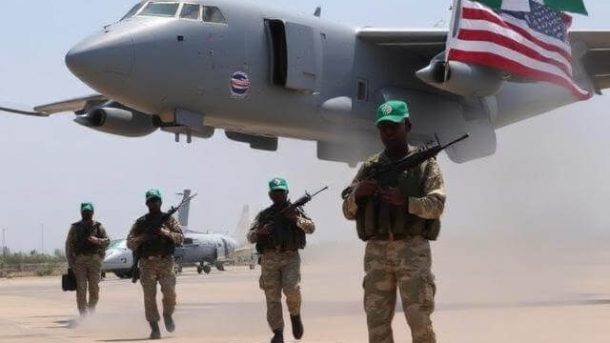
US Sends Military Task Force to Nigeria
The deployment of an American military team to Nigeria has brought new international focus on the question of security, diplomacy and strategic partnerships in West Africa. While such deployments are seldom merely straightforward or symbolic, they are usually stacked with political judgments, humanitarian considerations and long-term geopolitical strategy.
Nigeria is not just another dot on the map. It is the most populous nation in Africa, its largest oil producer and a cultural superpower with influence throughout the region. When the United States increases military engagement there, it means more than tactical coordination. It speaks to larger anxieties about terrorism, maritime security, regional stability and global rivalry.
A fuller comprehension of this development demands going beyond the headlines. It begs for an examination of Nigeria’s internal security problems, America’s strategic interests and the fraught history of military cooperation between the two countries.
Nigeria’s Security Landscape
The Persistent Threat of Insurgency
Nigeria has endured a decade or more of security crises. An insurgency by Boko Haram in the northeast has left a wide swath of destruction. Thousands have died, millions have been displaced and whole communities have been upended.
While the Nigerian military, along with regional partners, has decimated the group, their influence hasn’t entirely waned. Splinter groups and related extremist organisations are still attacking, particularly in far flung areas where the state presence is reduced.
Besides Boko Haram, Nigeria’s security challenges include bandits with guns in the northwest, separatist pressures in the southeast and communal problems in the Middle Belt. The interlocking nature of these security threats means that the country is at the centre of international counter-terrorism collaboration.
Maritime and Economic Security
Nigeria has a key strategically important coastline on the Gulf of Guinea. The area has long been prey to piracy, oil theft and smuggling. Nigeria is a top exporter of oil, and any breakdown in the country’s energy infrastructure spreads ripples that go beyond Africa.
There are also American military personnel in Nigeria who may be associated with the maritime companies and intelligence sharing and capacity building intended to secure shipping routes. It is not only Nigerian, but global, priority to secure the energy highways and trading corridors.
US strategic interests
Counterterrorism and Stability
For the United States, security cooperation with Nigeria fits into its longstanding priorities for counterterrorism. As early as the 2000s, Washington has deepened alliances across Africa to prevent extremist networks from establishing a foothold.
The role of American military advisors is often an advisory, support or training one and not a “fighting” one. Their purpose is to bolster local forces so they can deal with threats on their own.
Stability in Nigeria is of concern to the United States not only because of terrorism but also because Nigeria has long played a leading role in regional peacekeeping missions. Nigerian forces have been known for their service to African Union and United Nations missions. Nigeria’s stability is also a bridgehead for broader continental security.
Geopolitical Competition
The global landscape is shifting. Africa is now the cockpit of competition between great powers. China and Russia have also stepped up political, economic and military activity across the continent.
For Washington, friendlier relations with Nigeria adds a diplomatic ally and provides leverage in West Africa. Military cooperation often comes with economic investment and political talking. It‘s a clear indication that the United States is a committed partner in Africa’s future.
Background and Context of U.S. cooperation with the Nigerian Military
It is not the first time United States and Nigeria are having relations. Diplomatic relations stretch decades, and military cooperation followed slowly.
The collaboration is underpinned by exchanges, joint exercises and counterterror aid. The United States has furnished equipment, surveillance capabilities and advisory help at various times, especially during the worst of the insurgencies.
Yet cooperation has not always been seamless. Human rights issues, political transitions and competing strategic priorities have at times caused tension. These subtleties expose the fine line between security assistance and sovereignty.
What Does Deployment Really Mean?
Advisory Role Versus Combat Role
So, when US military team deployments are reported, we are not necessarily talking about combat troops at the front line. These teams are often advisory or support.
They could help with intelligence, cyberdefenses, medical support, logistics planning or the training of specialized units. The scope and the mission of the deployment make all the difference in evaluating its implications.
Transparency about the scope of the mission can also help allay domestic fears within Nigeria that foreign forces are on its soil.
Capacity Building and Institutional Strengthening
Capacity building is one of the key objectives of contemporary military cooperation. Rather than displacing indigenous forces, the emphasis is on increasing their capability.
Training programs could range from counter-improvised explosive device tactics, to urban combat training or maritime patrol standings. Such capacity-building takes time, and can transform how security institutions function.
Yet success depends on sustainability. Training must be accompanied by institutional change, mechanisms for accountability and resources from Nigeria’s own government.
Domestic Reactions Within Nigeria
It’s a mixed public mood in Nigeria about a foreign military incursion. On the one hand, many citizens really do want increased security. Kidnappings, attacks and instability have upended daily life in some areas.
On the other hand there is a strong smell of national sovereignty. Nigeria has a great tradition of independence and regional leadership. The notion of foreign troops working within its borders can give rise to doubt.
Civil society organisations frequently demand clarity around the mission mandate and oversight. Transparency can also help to promote public trust and prevent the spread of misinformation.
Regional Implications in West Africa
The security environment in Nigeria affects its neighbors, including Niger, Chad and Cameroon. The Lake Chad basin has seen the spread of insurgencies across the border, requiring collaborative responses.
It may also lead to regional cooperation if the US surge boosts Nigeria’s operational capacity.” There may be a smoother flow of intelligence across borders and an increase in the efficiency of joint operations.
However, regional dynamics are sensitive. Cooperative arrangements may be challenged by political turmoil in neighbouring countries. Good diplomacy is as important as military readiness.
Humanitarian Dimensions
Security operations and humanitarian interests inevitably collide. In conflict areas, individuals often suffer from food insecurity, displacement and restricted access to medical treatment.
Stabilization might also allow humanitarian assistance to be delivered in safer conditions. But it’s a tool that needs to be wielded with care, so as not to cause civilian harm or give the impression of militarizing humanitarian space.
Relations between security forces and humanitarian groups must be based on clear lines of separation and respect for internationallaw. It is imperative to build confidence with local communities for a long term peace.
Balancing Security and Human Rights
One of the perennial controversies over US military aid and support abroad is HR. The United States has frequently tied security assistance to demands for accountability and respect of international norms.
Nigeria’s military has been accused of misconduct in previous operations. Keeping up with these issues in an open and honest way is critical to maintaining global support.
One combining human rights education and oversight mechanisms could improve not only tactical but also institutional performance.
Economic and Political Ripple Effects
Stability has direct economic consequences. Investors take into account security threats when they decide. A better world can promote not only domestic entrepreneurship but also foreign direct investment.
Nigeria’s oil-dependent economy is diversifying only gradually. With better security, agriculture, technology and manufacturing could experience faster growth.
Politically, working with the U.S. might also boost Nigeria’s position worldwide. It’s further solidifying its stature as an important partner in global forums and regional diplomacy.
Risks and Uncertainties
Military deployment is not risk free. Security situations can evolve unpredictably. Advisory assistance can get caught up in larger regional fights.
Furthermore, the perception of foreign interference can be abused by extremist propaganda as well and portray cooperation as such. So there is a need for the control of public communication.
Another unknown lies in commitment for the long-term. Sustainable security reform requires patience. Short-term deployments have potential to be limited in impact without inclusion as components of larger strategical plans.
The Broader African Context
In Africa, security relationships with world powers are changing the face of defense. Some countries have opted to host bases or training missions; other have been rethinking the issue.
Nigeria is noteworthy in this regard, because of the country’s magnitude and clout. The outcome of this collaboration could help to establish models for similar projects in others areas of the continent.
Africatimes.com By Colin Redmer Sovereignty, partnership and strategic autonomy continue to be key themes in African foreign policy discussions.
Looking Ahead
The sending of a US military team to Nigeria is not new in itself. It’s an indication of the intersection between security threats, geopolitical objectives and diplomatic concerns.
The main issue is whether it will lead to more security for Nigerian citizens.” For the United States, the challenge is how to shore up stability without stretching commitments too thin.
In the end, durable peace in Nigeria will require more than just military cooperation. It will take governance reform, economic opportunity, community reconciliation and regional diplomacy.
Military teams can consult, advise and assist. They may exchange intelligence and technology. But that foundation of lasting peace lies in Nigeria, itself: in institutions that are accountable, leadership that is responsive, and a people who are resilient.
In that regard, the American deployment should not be viewed as a definitive solution but one element in a much longer journey toward security and partnership. “In the years to come this joint force will either become a beacon of constructive partnership and an important precedent for global peacekeeping, or provide fertile ground for skeptics who say such efforts are impossible in the real world,” he said.
Discover xmanyloveme: The Innovative Online Dating Platform for Genuine Connections


